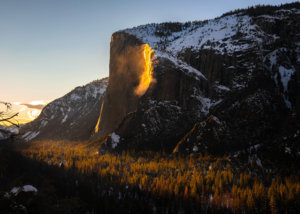

Marveling at iconic scenery over the dashboard – sure, it’s a thing in Yosemite Mariposa County. But for a specific set of visitors, there’s more to explore: a world of adrenaline-fueled experiences. Four seasons of thrills and boundary-pushing adventures await the bold, the intrepid, and the athletic visitor.
Soaring peaks and steep inclines for mountaineering, remote high-country snow for board sports, granite walls for climbing, chain-stretching trails for mountain biking, and roiling rivers for whitewater rafting – all are in thrilling abundance in Yosemite Mariposa County. Find your preferred path to groove with gravity (or defy it altogether) – there are countless ways to release those endorphins!
Spring Rush
When high-country snow starts melting with spring’s warming sun, Yosemite whitewater rafting enters its peak-flow season. Imagine the power of Yosemite Falls on a horizontal plane! Yosemite Valley waterfalls pour into the Merced River and, after flowing through and outside the Park, the Merced becomes a churning flume ride from late April through early summer. Yosemite’s certified whitewater guides have decades of experience running the Merced and offer half-day and full-day paddles on Class II to Class IV rapids. Best practice: contact your preferred outfitter to get intel on the current river flow and make that reservation well in advance. Paddle, paddle, paddle!
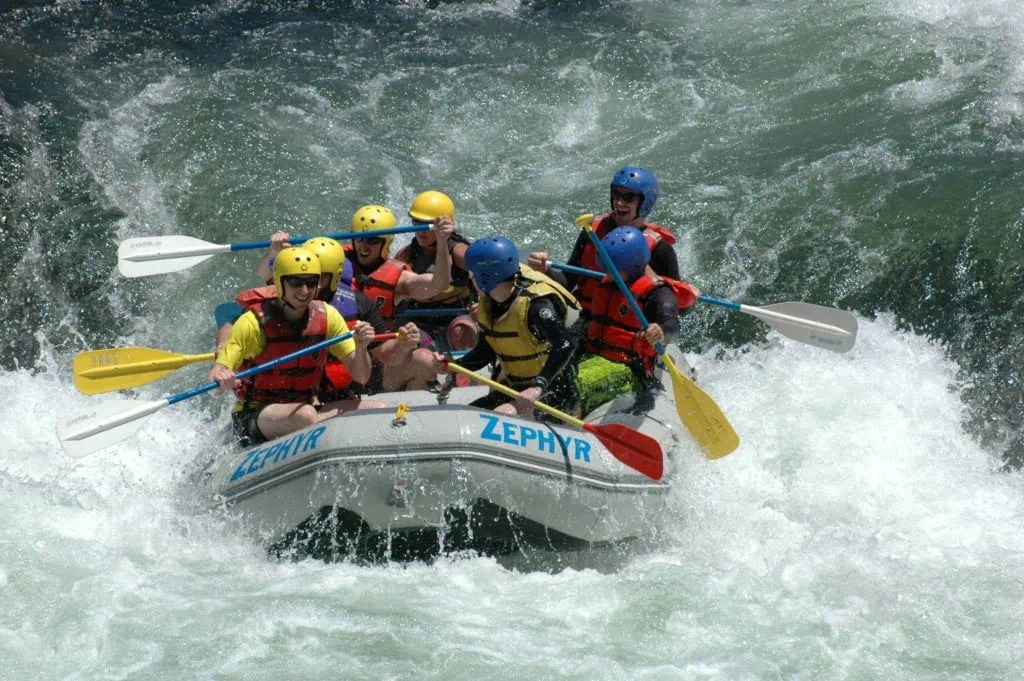
The town of El Portal on all-season Highway 140 is the favored put-in point, and from there the Merced in spring is 30 miles of foam and fury before emptying into Lake McSwain/Lake McClure. The Briceburg Suspension Bridge is a river-rafting hub and comes with a basecamp of first-come, first-served BLM campgrounds and beaches fronting the Wild & Scenic Merced River Recreation Area.

Back on dry land, gearheads love to bomb runs at Exchequer Mountain Bike Park. Located at Lake McClure (near Barrett Cove Campground), Exchequer’s 700 acres of trails have an added bonus at the top of the ridge: a view of Yosemite’s Gray Peak (11,573 ft) and Red Peak (11,699 ft), part of the Clark Range southeast of Yosemite Valley. Springtime is especially lush with verdant green hills alive with the sound of … mountain bikes ripping up and down the dedicated terrain.

Summer Rock Fest
Hiking and rock climbing are two of Yosemite’s classic pastimes. Both get that good mojo rising in different ways. Whether you’re crunching along a granite-carved trail in Yosemite’s high country, roped onto a technical wall, or scrambling up a dome, exhilaration will ensue.
Yosemite is one of the world’s premier rock climbing venues. With a variety of vertical terrain including walls, knobs, and domes, from world-famous like El Capitan to under-the-radar such as Lembert Dome, there are ascents aplenty. Experienced climber or beginning rocker, hiring a guide from the Yosemite Mountaineering School & Guide Service is the best way to learn the Yosemite ropes. For an intro to Yosemite’s rocks, check out Magma Carta and the Yosemite Climbing Museum in Mariposa.

There are hikes, and there are HIKES to be found in Yosemite National Park. Fitting for the adrenaline focus of this story, we’ll focus on the upper-case variety of hiking Yosemite. With extreme elevation gains, glacially-carved valleys, and wilderness solitude, Yosemite’s high country hiking is nonpareil both in terms of challenge and unabashed beauty! Here are two, one to rock and one to roll:
Many Yosemite Valley visitors marvel over Clouds Rest, the knife-edge of granite that hovers behind Half Dome. With a Yosemite National Park Wilderness Permit in hand, hikers can reach Clouds Rest from the Sunrise Lakes trailhead. It’s a 14.2 mile round-trip with an elevation gain of 1,775 feet before finally reaching Clouds Rest at 9,926 feet. The views from Clouds Rest extend in every direction, but don’t spin around too fast – the granite shelf is only a few meters wide at its narrow point! Intrepid backpackers can continue from here to Half Dome and Glacier Point via the Panorama Trail.

Waterworks anyone? Extending roughly 30 miles between White Wolf and Tuolumne Meadows, the Grand Canyon of the Tuolumne River trail rolls with multiple waterfalls and gorgeous vistas. The trail’s largest waterfalls are Waterwheel, Le Conte, and California as they roar through Muir Gorge. With a 5,350-ft. elevation differential between Pate Valley up to Glen Aulin, these are waterfalls well-earned! A Yosemite Wilderness Permit is required for the hike.
Fall Flights
As stunning as Yosemite is from the ground, vistas get even more dramatic from above. And we’re not talking a bus tour to Olmsted Point and Glacier Point; more along the lines of airborne adventures!
Yosemite Valley’s sheer granite walls make it an otherworldy place for hang gliding, permitted in Yosemite National Park with a recreational Commercial Use Authorization issued to the Yosemite Hang Gliding Association. The season runs mid-June through mid-October. The take-off spot is Glacier Point with a defined flight path to the landing zone at Leidig Meadow on the Yosemite Valley floor. Consult the YHGA website for all the details and get set to soar! For more air under your wings, Lake McClure is an outside-the-park hang gliding locale, where the Mother Lode Sky Riders Association can help you get your wings.
Maybe the most direct path to heart-pumping Yosemite aerial adventure is jumping out of an airplane with Skydive Yosemite. Operating out of Mariposa-Yosemite Airport, Skydive Yosemite is the only skydiving center with an eagle’s-eye view of El Capitan and Half Dome. Dives include an aerial tour of Yosemite National Park and pro video as you tug that ripcord. Skydive Yosemite is staffed with experienced jumpmasters and pilots to help you take the leap!

Fun fact: Yosemite Valley’s sheer granite walls made it the natural place for BASE jumping to be born. This is the sport where people in flying squirrel-like winged outfits with parachutes literally jump off cliffs. Modern BASE jumping was coined and popularized by filmmaker Carl Boenish in the late 1970s when he filmed a cohort of daredevils flying off the nose of El Capitan. BASE jumping, alas, is not currently permitted in Yosemite National Park.
Snow Show
Winter is wahoo in Yosemite, and all modes of skiing and snowboarding are available along and above Glacier Point Road. One of just a handful of National Parks with a downhill ski resort, Yosemite’s Badger Pass Ski Area is a rare gem, and Badger’s snowboard terrain park is shredworthy. California’s first ski resort when it opened in 1935, Badger Pass lifts run from mid-December to mid-March (weather dependent, as Badger Pass is an all-natural snowpack hill; no snowmaking is permitted on the National Park property).

If cross-country skiing is your jam, there are nearly 100 miles of marked trails (including 25 miles of groomed trails) through the forests surrounding the Nordic Center at Badger Pass. Glacier Point Road closes for the season beyond Badger, creating the possibility for car-free ski. And snowshoers can set off overland from Badger to the Yosemite Valley Rim via the ungroomed Dewey Point Trail, a 7.8-mile round trip with views that will wow.

Experienced cross-country skiers can attempt expedition-class overnight trips (guided or unguided) to a pair of overnight shelters from Badger Pass. Set at scenic Glacier Point with otherworldly views of Yosemite Valley and Half Dome, the Glacier Point Ski Hut is a popular run for day trippers and overnight guests. The out-and-back day trip is 8-9 hours on trail. Guided and self-guided overnight trips are also an option, with meals and lodging in a rustic lodge included.

Set about 10 miles from Badger Pass at an elevation of 8,500 feet, Ostrander Ski Hut is a two-story stone structure crafted in 1941 by the Civilian Conservation Corps for backcountry cross-country skiers. This is another journey that takes considerable stamina and cross-country experience as it delivers signature views of Half Dome, the Clark Range, and more. Yosemite Conservancy manages reservations for Ostrander Ski Hut, and is the source for more information.
Accommodations for Adventure
After you’ve come down from the endorphin overload and pulse is back to resting, here are three perfect places to stay pre- and post- your adrenalized activities in Yosemite Mariposa County:
Tenaya at Yosemite
Tenaya at Yosemite is one of Sierra’s top destination resorts. Basecamp-worthy for those about to rock, this mountain resort is tucked into the Sierra National Forest just a few turns away from Yosemite National Park’s South entrance, with Badger Pass Ski Area fun just beyond. With treatments like deep tissue massage and hyaluronic hydrating facials, Tenaya’s Ascent Spa is an absolute haven for capping off a day of heart-pumping thrills and adventure.

Yosemite Bug Rustic Mountain Resort
Situated at the heart of the Merced River Canyon in Midpines, Yosemite Bug Rustic Mountain Resort offers a mind-blowing range of lodging styles, from hostel-style shared spaces to private cabins with forest-view decks. A pair of features at the Bug are on-point for adventure travelers: the Yosemite Health Spa soothes those stretched muscles with aromatic soaking tubs, massage, hot tub, and a yoga studio. And for hearty fare, ask any local: the June Bug Café plates up some of Yosemite Mariposa County’s most interesting cuisine in a rustic, casual setting. Nice selection of Cali wines and craft beer on tap, too.

Camp 4
Camping is on-brand for the outdoor adventure traveler, and there may be no more perfect expression of that than Yosemite Valley’s Camp 4. Known as “the climbers camp,” Camp 4 is situated across from the Yosemite Lodge on Northside Drive. The campground is dotted with large boulders and campsites in between. There’s a healthy disregard for conformity in the air that dates to Yosemite’s rock climbing legacy. Unlike other Yosemite Valley campsite reservations, Camp 4 is first-come, first-served (also on brand for this iconoclastic venue!) with registration at the camp kiosk from spring through fall, and self-registration in the winter. When it comes to bang-for-buck, camping is best practice!

There are hundreds of additional options, ranging from resort lodging and vacation cabin rentals to glamping and RV parks. Discover the perfect place to stay in Yosemite Mariposa County with Yosemite.com’s Lodging Guide, and gear up for the time of your life!
- August 19, 2026Yosemite’s Off Season Travel | Late Summer & Early FallExperience the beauty of Yosemite during off-season. Shoulder season travel in Yosemite refers to late summer and early fall when there is mild weather, more breathing room on the trails, and budget-friendly options - perfect for your next outdoor adventure. Plan your next Yosemite trip during low season using these recommendations.Read More
- May 14, 2026100 Things To Do In Mariposa County | Outside YosemiteDiscover 100 things to do in Mariposa County beyond Yosemite National Park, from outdoor adventures and historic Gold Rush towns to local food, lakes, art, and hidden gems throughout the Sierra foothills.Read More
- January 21, 2026Yosemite Firefall 2026 GuideYosemite's natural firefall at Horsetail Fall draws hundreds of photographers for a few weeks in February when the setting sun lights Horsetail Fall and turns the water a brilliant molten orange, reminiscent of the Glacier Point firefall.Read More